


A little over a month ago, Eli Bibas returned to his home in Kibbutz Tze'elim in the northern Negev after months of traveling across Israel. Since October 7, he had devoted himself entirely to the struggle to bring home the hostages, including his son, Yarden Bibas.
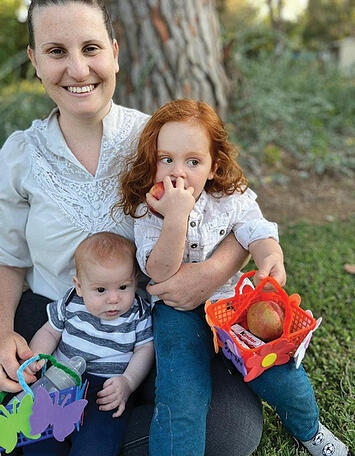
When Yarden was freed after 484 days in Hamas captivity, Eli moved to be close to him, staying in a room at the Kfar Maccabiah hotel complex. Yarden is now beginning the difficult path of rebuilding his life without his wife Shiri and their two young sons, Ariel and Kfir, who were abducted from their home in Kibbutz Nir Oz and murdered in captivity. He will soon be moving into a new home of his own.
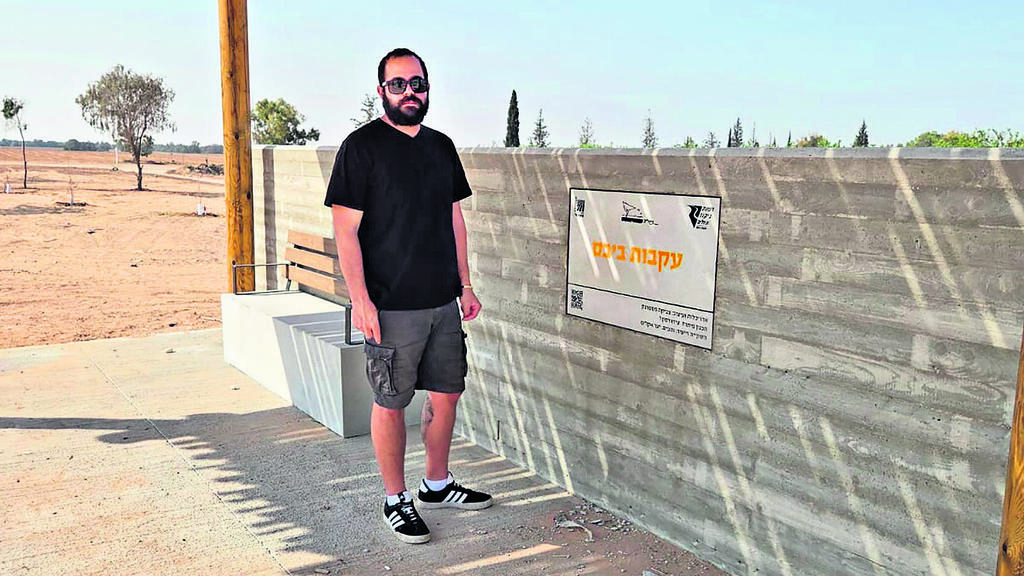
Eli, meanwhile, has begun a new yet familiar chapter in his life—returning to his kibbutz and slowly readjusting. He splits his time between longtime friends in Tze’elim and new connections he formed since the war began.
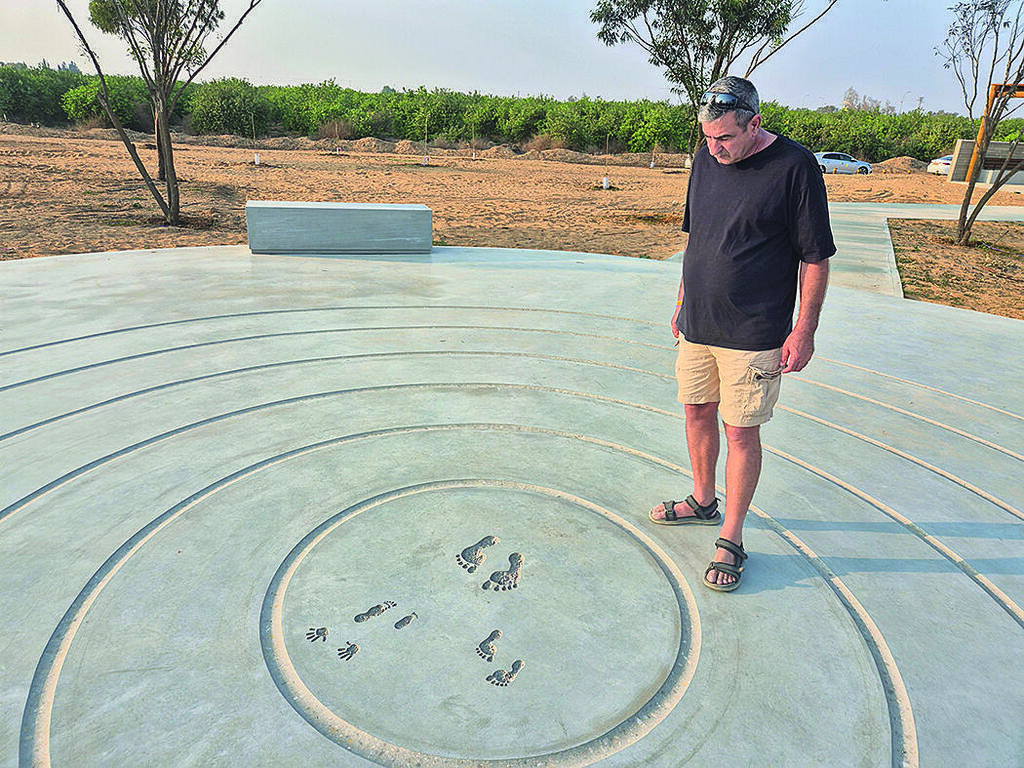
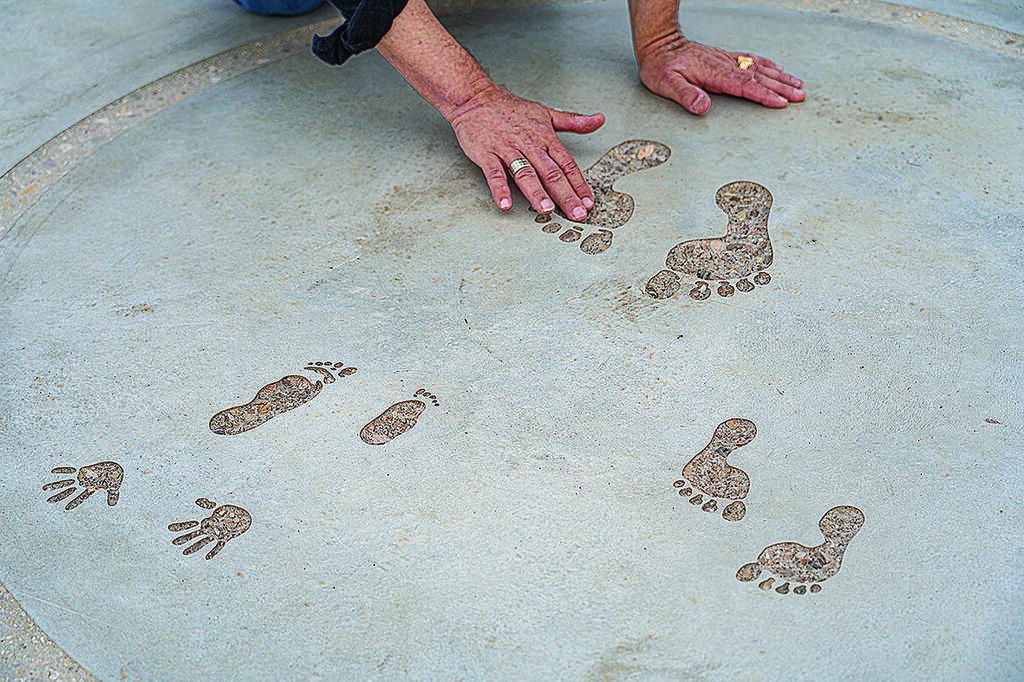
Almost every day, Eli walks from his house to a nearby grove, where the “Bibas Footprints” memorial has just been completed and is being revealed here for the first time. Whenever he visits, he stands over the installation and gazes down at the concrete slab where the footprints of his daughter-in-law and grandchildren are embedded: two adult prints from Shiri, two smaller ones from Ariel, and the handprints and knee marks of baby Kfir, left as if from a moment when he was still crawling. Around them are widening circles, as if marking the echo of their presence.
The site will soon open to the public. “It’s incredibly moving to stand here above their footprints,” Eli says. “It’s so tangible, like they passed through here and kept going. I think it’s a brilliant idea.
“There are many memorials to the Bibas family. In Ramla, for example, a square is being built in their honor, and there’s another one in Ma’ale Adumim. But this one feels much deeper. I hope this place will be more than a memorial—also a destination for the many travelers who come to this region. That they’ll come here, hear the story and feel what we feel. I just hope they’ll respect it. That no one will park on the concrete or picnic here and leave trash behind.”
'Sadly, we’ve become a symbol'
Yarden Bibas was born and raised in Kibbutz Tze'elim, where his parents Eli and Edna still live. In 2018, he married his high school sweetheart, Shiri Silberman, and the couple moved to Kibbutz Nir Oz—Shiri’s birthplace. But Tze'elim remained a constant connection in their lives.
Last week, Yarden visited the newly completed “Bibas Footprints” memorial and gave his final approval for the installation.
“On one hand, it’s deeply moving to see such an initiative, especially the footprints,” Yarden said. “On the other hand, it’s still incomprehensible to me. It’s only been eight months since I was released from captivity. Before that, nobody knew who I was—and now, people recognize me everywhere. We were a very anonymous family before October 7. Just regular people. Now ‘Bibas’ is one of the most well-known names in Israel, and even around the world, especially among Jewish communities.”
“It’s touching to see how much love there is for our family, both here and abroad. People have taken on memorial projects for Shiri, Ariel and Kfir, and I’m grateful for that. It warms the heart.”
Asked whether he connected to the site and the idea behind it, Yarden replied with a modest smile: “I’m not a very artistic person, but footprints are something meant to last, and I think that’s very special. Also, the fact that they took a place where there was nothing and turned it into a memorial for my family. I’m not the only victim of October 7, but sadly, we’ve become a symbol. It’s still hard for me to grasp that there’s a memorial being made for my family. I guess I still don’t fully understand how big the Bibas story has become.”
Though the family lived in Nir Oz, Yarden says his connection to Tze'elim runs deep. “It’s very meaningful to me that the monument was built near Tze'elim. Our family has a strong bond with this place. I was born and raised here, and my parents still live here. Our wedding was by the pool in Tze'elim. Ariel and Kfir’s brit milah ceremonies were held in the synagogue here. We used to visit my grandparents here at least once a week. I came even more often because I worked nearby while we were living in Nir Oz.
“To the kids, Tze'elim was Grandma and Grandpa’s house. We used to go on weekend walks in the area. There was a spot where we’d meet up with my sister, brother-in-law and their kids—we’d lay out a blanket and have a picnic. Right across from the memorial site is where my classmates and I had our bar mitzvah ceremony. As part of the event, we built a rope bridge and held a traditional bonfire. Tze'elim is the source and the home. That’s why building the memorial here feels right.”
When asked what goes through his mind as he stands above the footprints of his wife and children, Yarden replied: “It’s hard and overwhelming—but also very moving. It depends on the day. There are days I can’t look at anything, and days when I’m stronger. When I came here, I knew what to expect because I was part of the process and was updated throughout the work. I truly hope that visitors who come here will respect the site and honor its significance.”
Circles with no exit
The memorial site was initiated by Boaz Kratchmer of Kibbutz Tze'elim, chairman of the Besor Stream Authority. “On the day Shiri and the boys were brought back and laid to rest, as I stood at the funeral in the regional cemetery in Tzohar, the idea struck me—we had to do something powerful in their memory,” he recounts.
“I brought the family into the project, we opened a WhatsApp group and started bouncing around creative ideas. I thought it would be most fitting to establish the memorial site in Tze'elim—the place where the family began and where Yarden was born and raised. There was a small grove of trees next to the kibbutz, along the 'Field Path.' Kibbutz veterans planted those trees 50 years ago. The grove had been neglected for years; the trees were desperate for water and care. When we began construction for the ‘Bibas Footprints’ site, we found, deep underground, remains of old water pipes—once part of the historic water pipeline project to the Negev.”
Kratchmer reached out to landscape architect Tzvika Pasternak, whose team also designed the “Letter and Name” memorial for the victims of Kibbutz Kfar Aza.
The idea of creating footprints came about by chance—during a martial arts practice. Pasternak has long trained in Meihuaquan, a Chinese martial art. In one training session, his instructor told him to “bring the energy down” into his footprints to maintain balance. That sparked the inspiration to use footprints as a motif.
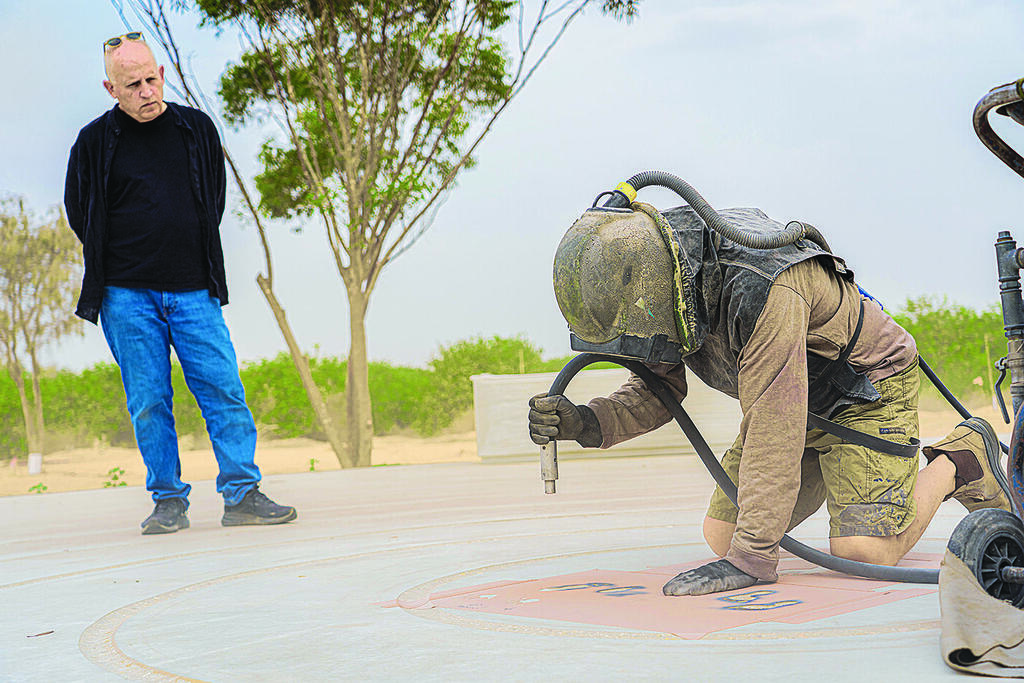
“Footprints are deeply personal,” he explains. “They’re the imprint of someone who was here and walked. But in this case, the footprints go nowhere—trapped and surrounded by circles with no exit, echoing Shiri and the children, imprisoned in Hamas tunnels. One day, I was telling my daughter about the idea during a beach walk, and she reminded me that little Kfir, who was only nine months old, was still crawling. So we added handprints and knee prints of a crawling baby.”
“The project reflects the horrific and brutal nature of their abduction—and the trace they left behind. But there's also a message in the footprints: we are still here. We remain. In memory, and in settlement. I feel that everything I’ve done in my 30-year career—some projects better than others—prepared me for designing and creating both ‘Letter and Name’ in Kfar Aza, and ‘Bibas Footprints’ in Tze'elim.”
Kratchmer emphasizes that the entire process was done in full coordination with Yarden, his sister Ofri and their parents. “After Yarden visited the site, he gave me the signal that he approved. He didn’t need many words. There are moments when there’s nothing to say—only to look.”
Black like Batman
At the entrance to the memorial site, a phrase is etched into the concrete wall: “Those who walked into time, those our souls loved, leave their footprints in our hearts.” The yellow lettering used for the name “Bibas Footprints” evokes the yellow pins worn in solidarity with the hostages. The surrounding black paint was chosen as a tribute to Batman—Ariel's favorite character.
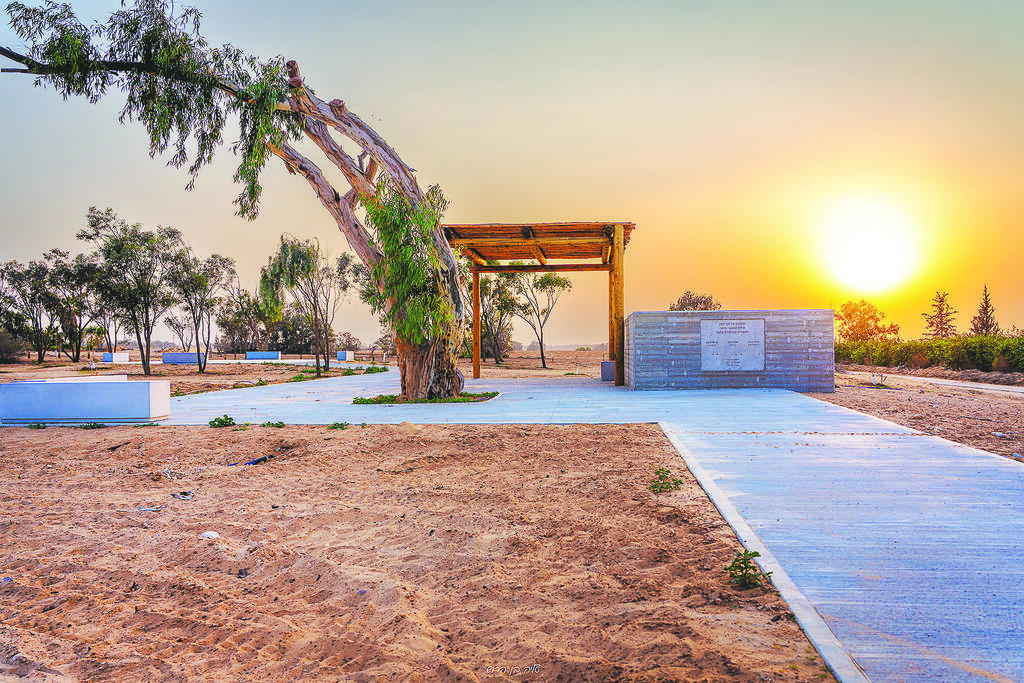
Around the site, eucalyptus and tamarisk trees have been planted, and benches will soon be installed for visitors. The memorial, which cost approximately 300,000 shekels ($93,000), will open to the public following a dedication ceremony scheduled for early December. It will be maintained by members of Kibbutz Tze'elim and the Eshkol Regional Council.
In the meantime, Kratchmer continues to visit the site daily, tending to the young saplings and checking the irrigation system. The regional drainage authority, which co-funded and helped build the site, is completing the final preparations.
“This will be a place where people can pause, rest, remember and reflect,” said Nehemia Shachaf, CEO of the Drainage Authority. “The power of this place lies in its simplicity. It blends naturally into the landscape.”
At the entrance stands a mature eucalyptus tree, parched and bent. Symbolically, three thick branches grow from its trunk. “As I looked at the tree, just after the site was completed, it suddenly hit me,” Kratchmer said. “The three branches are like Shiri, Ariel and Kfir—deeply rooted in our hearts.”